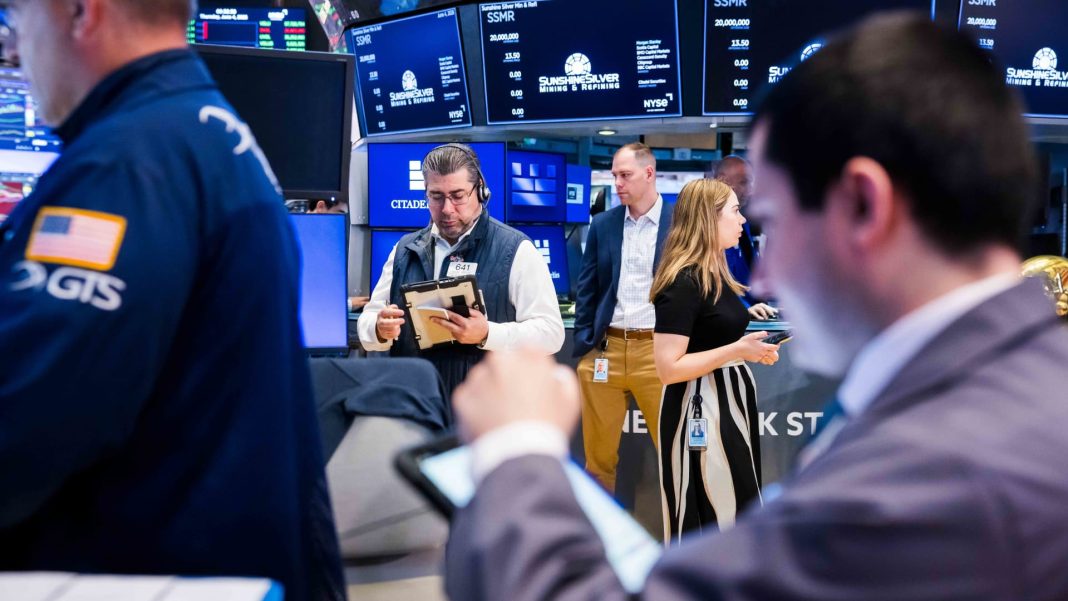

AI tools marketed as “Bloomberg killers” can imitate parts of the terminal experience, but they struggle to replicate its core strength: the social and communication layer built around IB Chat. Experts caution that these systems are not designed as full replacements, with one saying they “haven’t attempted to nor intend to replace the terminal,” while another warns that large language model outputs may appear convincing but still require verification.
For many market professionals, the Bloomberg Terminal has become almost indispensable, with one derivatives head saying that a 24-hour outage would feel like “losing a limb” on a trading desk. Over decades, the terminal has survived corporate rivals, the 2008 crisis, and in-house systems by adapting and maintaining deep trust with users, even as new AI products like Perplexity’s “Computer” demonstrate they can mimic basic data feeds and charting in a Bloomberg-style interface.
ThinkMarkets unveils MCP server, says “AI can trade, not touch funds
AT the same time, ThinkMarkets launched a Model Context Protocol (MCP) server, ChelseaAI, to enable traders to access its platform through any AI client. According to co-founder and CEO Nauman Anees, traders can connect any large language model (LLM) to place trades without logging into the platform. H described it as a shift in how trading ideas are generated and decisions are made.
BREAKING: We just gave Claude access to the entire options and stock market and it’s not a demo.
It’s the Unusual Whales MCP Server. It plugs directly into any AI assistant and gives it live, structured market data on demand.
Build a trading bot. Build a finance dashboard.… pic.twitter.com/XKL554g7f2
— unusual_whales (@unusual_whales) March 11, 2026
Anees added that the integration removes the need for manual charting, indicators, automated trading setups, or market analysis, as these tasks can be handled by AI, reducing user friction.Despite the expanded functionality. ThinkMarkets emphasized that AI access to funds is restricted by design. The broker has also introduced a permissions system called “scopes,” allowing users to control whether AI is authorized to place orders on their behalf.
CMC Markets FY26 pre-tax profit rises 20%
In the CFD space, CMC Markets reported net annual operating income of £392.6 million for the fiscal year ended 31 March, marking a 15% increase. Pre-tax profit rose 20% to £101.3 million, with the pre-tax margin improving by 1 percentage point to 25.8%. EBITDA reached £117.8 million, up 14%, while earnings per share climbed 22% to 27.5 pence.
The company described the performance as its strongest on record outside the COVID-impacted FY2021. Looking ahead, CMC Markets expects operating income to grow by at least 17% in the current year, with projections ranging between £460 million and £480 million.
Gunmen target Limassol office housing CFD brokers
In a bizarre incident, gunmen opened fire on the Santa Barbara Business Centre in Limassol, a building that houses several CFD brokers, in the early hours of Wednesday. While brokerages operate in the building, the intended target may not have been one of them, according to information obtained by Finance Magnates.
Employees reported the incident to police after discovering bullet damage to the building’s glass facade, with marks clearly visible from outside. Local police confirmed they were alerted around 8 a.m., and initial findings showed that shots struck glass panels on a company’s balcony within the premises.
How to spot a dividend cut early
Europe’s dividend market is showing signs of strain, with several major companies cutting payouts as earnings weaken and financial pressures grow. According to Capital Group, dividend growth in Europe reached just 3.4% in the first quarter, supported partly by exchange rates, while cuts from companies such as Kering and Norwegian energy firms weighed on overall performance.
Analysts warn that rising debt, lower profits, and increased investment needs are forcing some of the region’s biggest income stocks to reduce or suspend dividends.Several high-profile firms have already taken action. Stellantis scrapped its ordinary dividend after reporting losses tied to its electric vehicle strategy, while Volkswagen, Mercedes-Benz, and Volvo have reduced payouts.
Bitcoin is this generation’s asset to protect themselves against undisciplined government spending.
That doesn’t mean it will be 100% of people’s portfolio.
Good capital allocators will own AI stocks, bitcoin, private startups & other assets.
I explained to @KellyCNBC today. pic.twitter.com/C5bEqGTKOt
— Anthony Pompliano 🌪 (@APompliano) June 4, 2026
In other sectors, Proximus cut its dividend by 50%, Acciona Energías Renovables slashed its payout by 93%, and Telefónica plans to halve its dividend in 2026. Analysts highlight key warning signs investors should watch, including weakening earnings, rising debt levels, and increased capital expenditure.
Prop firms watch traders, but who watches payouts?
In the prop trading space, firms have developed more advanced evaluation systems to identify skilled traders. But passing a challenge does not always indicate genuine trading ability. In many cases, traders may meet profit targets due to short-term market variance rather than consistent skill.
As firms scale, this creates the risk of funding accounts that appear successful during evaluation but do not reflect a reliable trading edge, leading to hidden costs over time. Beyond individual performance, firms also face broader risks at the funded account stage. These include concentrated payout exposure, correlated trading behavior, and execution costs that only become visible when accounts are viewed collectively as a portfolio.
US crypto perps may replace offshore workaround
Coinbase, Kraken, and Kalshi claimed to be among the first platforms in the US to launch crypto perpetual futures following a policy statement by the Commodity Futures Trading Commission (CFTC) permitting these products. The move contrasts with Europe, where regulators are considering classifying perpetual futures as contracts for differences (CFDs), a step that could impose stricter limitations on their availability.The market for perpetual futures is already large and growing.
Trading volumes reached $61.7 trillion in 2025, up 29% from the previous year, according to CryptoQuant, while Kalshi estimated offshore volumes exceeded $90 trillion. Decentralized exchanges also play a significant role, processing more than $1.2 trillion in monthly perpetual futures trading by the end of 2025, with platforms like Hyperliquid leading activity.
FCA urges football clubs to vet crypto partners
Finally, the UK’s Financial Conduct Authority (FCA) warned Premier League and other football clubs that partnering with unauthorized crypto and trading firms could expose them to legal risks, including potential criminal sanctions. The regulator is increasing pressure on clubs to take responsibility for their commercial partnerships and ensure sponsors comply with UK financial promotion rules, according to Reuters.
For years, offshore brokers, crypto exchanges, and high-leverage trading platforms have used football sponsorships to reach UK retail clients without following standard promotion requirements. With around 70% of Premier League clubs holding at least one such partnership, these deals have become a key revenue source, especially as gambling sponsorships are gradually being phased out.
AI tools marketed as “Bloomberg killers” can imitate parts of the terminal experience, but they struggle to replicate its core strength: the social and communication layer built around IB Chat. Experts caution that these systems are not designed as full replacements, with one saying they “haven’t attempted to nor intend to replace the terminal,” while another warns that large language model outputs may appear convincing but still require verification.
For many market professionals, the Bloomberg Terminal has become almost indispensable, with one derivatives head saying that a 24-hour outage would feel like “losing a limb” on a trading desk. Over decades, the terminal has survived corporate rivals, the 2008 crisis, and in-house systems by adapting and maintaining deep trust with users, even as new AI products like Perplexity’s “Computer” demonstrate they can mimic basic data feeds and charting in a Bloomberg-style interface.
ThinkMarkets unveils MCP server, says “AI can trade, not touch funds
AT the same time, ThinkMarkets launched a Model Context Protocol (MCP) server, ChelseaAI, to enable traders to access its platform through any AI client. According to co-founder and CEO Nauman Anees, traders can connect any large language model (LLM) to place trades without logging into the platform. H described it as a shift in how trading ideas are generated and decisions are made.
BREAKING: We just gave Claude access to the entire options and stock market and it’s not a demo.
It’s the Unusual Whales MCP Server. It plugs directly into any AI assistant and gives it live, structured market data on demand.
Build a trading bot. Build a finance dashboard.… pic.twitter.com/XKL554g7f2
— unusual_whales (@unusual_whales) March 11, 2026
Anees added that the integration removes the need for manual charting, indicators, automated trading setups, or market analysis, as these tasks can be handled by AI, reducing user friction.Despite the expanded functionality. ThinkMarkets emphasized that AI access to funds is restricted by design. The broker has also introduced a permissions system called “scopes,” allowing users to control whether AI is authorized to place orders on their behalf.
CMC Markets FY26 pre-tax profit rises 20%
In the CFD space, CMC Markets reported net annual operating income of £392.6 million for the fiscal year ended 31 March, marking a 15% increase. Pre-tax profit rose 20% to £101.3 million, with the pre-tax margin improving by 1 percentage point to 25.8%. EBITDA reached £117.8 million, up 14%, while earnings per share climbed 22% to 27.5 pence.
The company described the performance as its strongest on record outside the COVID-impacted FY2021. Looking ahead, CMC Markets expects operating income to grow by at least 17% in the current year, with projections ranging between £460 million and £480 million.
Gunmen target Limassol office housing CFD brokers
In a bizarre incident, gunmen opened fire on the Santa Barbara Business Centre in Limassol, a building that houses several CFD brokers, in the early hours of Wednesday. While brokerages operate in the building, the intended target may not have been one of them, according to information obtained by Finance Magnates.
Employees reported the incident to police after discovering bullet damage to the building’s glass facade, with marks clearly visible from outside. Local police confirmed they were alerted around 8 a.m., and initial findings showed that shots struck glass panels on a company’s balcony within the premises.
How to spot a dividend cut early
Europe’s dividend market is showing signs of strain, with several major companies cutting payouts as earnings weaken and financial pressures grow. According to Capital Group, dividend growth in Europe reached just 3.4% in the first quarter, supported partly by exchange rates, while cuts from companies such as Kering and Norwegian energy firms weighed on overall performance.
Analysts warn that rising debt, lower profits, and increased investment needs are forcing some of the region’s biggest income stocks to reduce or suspend dividends.Several high-profile firms have already taken action. Stellantis scrapped its ordinary dividend after reporting losses tied to its electric vehicle strategy, while Volkswagen, Mercedes-Benz, and Volvo have reduced payouts.
Bitcoin is this generation’s asset to protect themselves against undisciplined government spending.
That doesn’t mean it will be 100% of people’s portfolio.
Good capital allocators will own AI stocks, bitcoin, private startups & other assets.
I explained to @KellyCNBC today. pic.twitter.com/C5bEqGTKOt
— Anthony Pompliano 🌪 (@APompliano) June 4, 2026
In other sectors, Proximus cut its dividend by 50%, Acciona Energías Renovables slashed its payout by 93%, and Telefónica plans to halve its dividend in 2026. Analysts highlight key warning signs investors should watch, including weakening earnings, rising debt levels, and increased capital expenditure.
Prop firms watch traders, but who watches payouts?
In the prop trading space, firms have developed more advanced evaluation systems to identify skilled traders. But passing a challenge does not always indicate genuine trading ability. In many cases, traders may meet profit targets due to short-term market variance rather than consistent skill.
As firms scale, this creates the risk of funding accounts that appear successful during evaluation but do not reflect a reliable trading edge, leading to hidden costs over time. Beyond individual performance, firms also face broader risks at the funded account stage. These include concentrated payout exposure, correlated trading behavior, and execution costs that only become visible when accounts are viewed collectively as a portfolio.
US crypto perps may replace offshore workaround
Coinbase, Kraken, and Kalshi claimed to be among the first platforms in the US to launch crypto perpetual futures following a policy statement by the Commodity Futures Trading Commission (CFTC) permitting these products. The move contrasts with Europe, where regulators are considering classifying perpetual futures as contracts for differences (CFDs), a step that could impose stricter limitations on their availability.The market for perpetual futures is already large and growing.
Trading volumes reached $61.7 trillion in 2025, up 29% from the previous year, according to CryptoQuant, while Kalshi estimated offshore volumes exceeded $90 trillion. Decentralized exchanges also play a significant role, processing more than $1.2 trillion in monthly perpetual futures trading by the end of 2025, with platforms like Hyperliquid leading activity.
FCA urges football clubs to vet crypto partners
Finally, the UK’s Financial Conduct Authority (FCA) warned Premier League and other football clubs that partnering with unauthorized crypto and trading firms could expose them to legal risks, including potential criminal sanctions. The regulator is increasing pressure on clubs to take responsibility for their commercial partnerships and ensure sponsors comply with UK financial promotion rules, according to Reuters.
For years, offshore brokers, crypto exchanges, and high-leverage trading platforms have used football sponsorships to reach UK retail clients without following standard promotion requirements. With around 70% of Premier League clubs holding at least one such partnership, these deals have become a key revenue source, especially as gambling sponsorships are gradually being phased out.