
The 401(k) record-keeping business is at a major crossroad. On the one hand, plan fees continue to decline, which, coupled with rising demand for service and costs, seems untenable. On the other hand, the opportunity to offer wealth services to the over 100 million active participants, either alone or in partnership with advisors, is immense. Firms like Fidelity, Vanguard and Schwab have proven the value, along with a few advisory firms like Captrust, Creative Planning and Morgan Stanley, but most others are early stage.
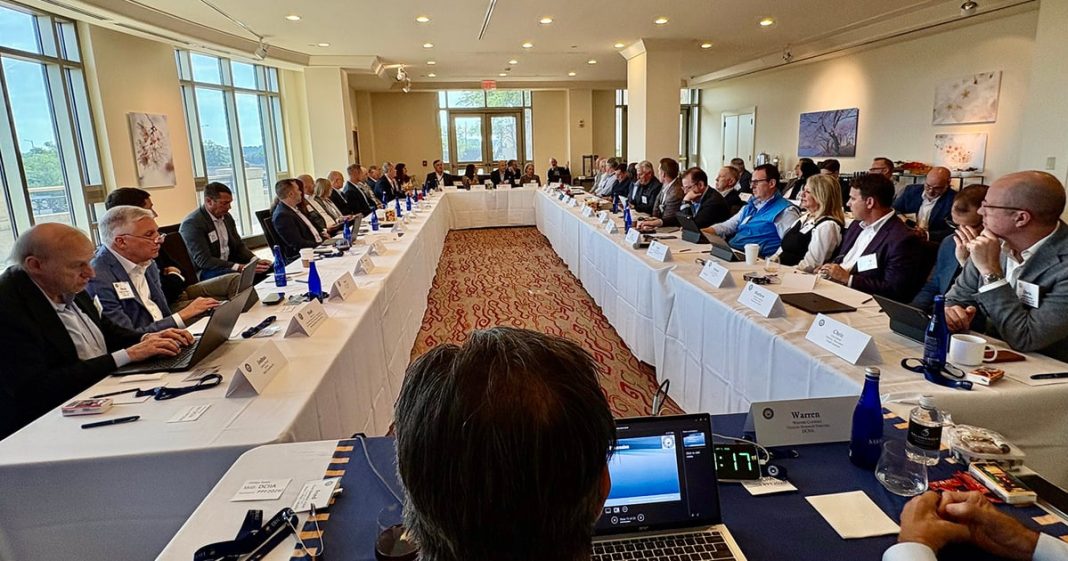
This existential issue was at the heart of the discussion at the 8th Annual RPA Record Keeper Roundtable held in conjunction with the DCIIA/SPARK/EBRI Public Policy Forum in Washington, D.C., along with how to close the coverage gap. That gap includes providing more households access to retirement plans at work as well as helping more participants not just save more for retirement but better manage their finances at work through advice, guidance and tools from both providers and advisors.
The issues facing 401(k) record keepers serving the RPA market are consistent with last year—the discussion moved toward how to solve them. These issues include:
-
Convergence of wealth and retirement at work (benefits are coming, soon)
-
Industry consolidation (which has stalled)
-
Explosion of new plans and how to service them
-
Leveraging tech and AI while dealing with cyber threats
The discussion began with why 401(k) record-keeping and advisory fees, unlike almost all other industries, have declined. Jeff Cimini, vice president at Principal, recalled that when 401(k) plans started, asset management fees, including stable value, provided significant revenue. When advisors started pushing on fees, there were still ample margins until the move to include outside investments. There was agreement that some advisors sold plans on their ability to lower costs through benchmarking and RFPs, which also led to more index funds and eventually the decline of advisory fees.
Another factor is that plan sponsors feel the need to lower costs as part of their fiduciary duties.
Most of the fintech providers like Betterment and Vestwell also admitted that they have felt fee pressure but still maintain high margins through technology and straight-through processing. Qian Liu from Gusto, formerly Guideline, stated that they raise prices 10% every two years to both new and existing clients, which is the norm in many industries, but most of their plans do not come through advisors. Alison Caron, vice president at Fidelity, stated that they custom price and do not care if they are the highest.
Josh Rundle from Ascensus said they usually lose clients because of a service glitch, not price, but when clients go to market, the fees generally decline. “The race to scale and to compete pushed prices down,” stated Thomas Moore at Betterment. Quoting Steve Jobs, William Reynolds, J.P. Morgan Asset Management executive director, said when companies attain a strong market position, like IBM and Xerox, driven by product and marketing professionals, they can suffer when they allow the sales division to take over. Bill Elmslie from Voya admitted his wholesalers are constantly pushing for lower fees to win plans.
The potential conflict between advisors and providers came up over who should be offering wealth services, such as IRA rollovers, to participants, with Elmslie quipping that relationships need to be formed well before the event.
Mark Jackowitz, also from Voya, said there is a significant disconnect between advisors and some home offices. “Advisors don’t want most of the participants because their accounts are too small, but some home offices want everything.” The result is that many participants remain unserved. “We want all participants, but the advisor doesn’t,” noted Caron. “The advisor will win if they have a relationship.”
Mark Iwry, from Brookings and former Treasury official in the Obama administration and still active in DC policy making, said the Trump administration is keenly forced on closing the coverage gap with two divergent paths. One would provide a public plan for all with a healthy government match, advocated by a senior White House official, while the other would be a federal mandate for an auto IRA with some savers’ match, which seems more likely.
Iwry noted that the government is concerned about the coverage gap and whether the $300 billion to $400 billion in tax deferments granted to the DC industry is worth it if they do not close it. To which Josh Deitch, partner at NMG Consulting, asked whether expansion to cover the gap would cost too much—Iwry noted that a federal auto IRA program would cost no more that $2 billion to $3 billion annually. Along with auto enrollment, SECURE 3.0 could include this federal mandate, with 17 states, all blue, requiring, which Iwry indicated has worked to help the private sector through more DC plans and more money in the system.
The focus turned to closing the financial gap for participants, which all providers agreed is an issue to which significant resources are being devoted. Chris Moran from Savvi Financial noted that rising health care and benefit costs make it harder for households to save for retirement. He said the industry needs to enable participants through tools to help them make better decisions.
Though emergency savings plans may make people more confident to save for retirement, Richard Tatum, president workplace savings at Vestwell, noted that there is low adoption even though the firm does not charge extra. Cimini asked why we do not just move to superannuation like Australia, to which Reynolds said would result in lower paychecks.
The issue of leakage came up with Dan Beck, founder and CEO at 401Go, noting that SMEs generally have higher leakage rates caused in part by friction in rolling assets into an IRA or the next plan. The Portability Service Network, along with auto-portability rules, was created to address the problem, but Jay Breitenkamp from Inspira questioned the veracity of some of the numbers published by PSN and asked why vendors of choice are not allowed to participate, as well as why other record keepers beyond the founding six have not joined.
“The DOL lost and found database is lost,” noted Iwry. “They asked for too much data.”
Steve McCoy at iJoin stated that advisors are getting more data, but many are not sure what to do with it, to which Will Hicks, head of retirement solutions at FIS, said, “When you know what to do with the data, we will help.” Part of the release of the cloud-based Omni and Relius includes 110 external applications and services, as FIS realized it cannot build everything. “The retirement ecosystem was not connecting.” The fintechs have built their own systems, with Rakesh Mahajan, CRO at Human Interest, focused on leveraging new tech and new thinking, just as the telephone industry did when they moved from wire to mobile.
The move to automate and institutionalize IRA rollovers is the mission of many providers like PenChecks, IRALOGIX, Inspira and iJoin to serve smaller accounts, especially those that advisors do not want. When asked what resistance there is, Pete Littlejohn, co-founder and president at IRALOGIX, said there is none other than tech builds, which sometimes have them waiting in the queue. Littlejohn asked, “Why should we stop at helping with retirement savings?”
Finally, Mike De Feo, principal at Apollo, said that private investments were a missionary project two years ago, as many thought it was a bridge too far, but that has changed dramatically since the executive order and DOL proposed rule.
Open, honest and candid discussions, without defensiveness or product or lobbying agendas, are required to move the industry forward. Though the interests of participants, plan sponsors, advisors and providers are not always aligned, they are all in the same boat headed in the same direction—improving the financial futures of participants and their families.