
When Nina Stibbs, partner and advisor at Raleigh, North Carolina’s AIM Advisors, was new to the industry, she found herself addressing a conundrum.
Processing Content
“I had a prospective client who I found out was not interested in being a client,” she said. “He was just hitting on me.”
The prospect repeatedly asked her to meet for drinks to discuss his financial situation. Stibbs, being new to the business and eager to network at the time, took a moment to realize what was going on. Then she quickly stepped back.
“I realized there was definitely a line being crossed, and I never put myself in that situation again,” she said.
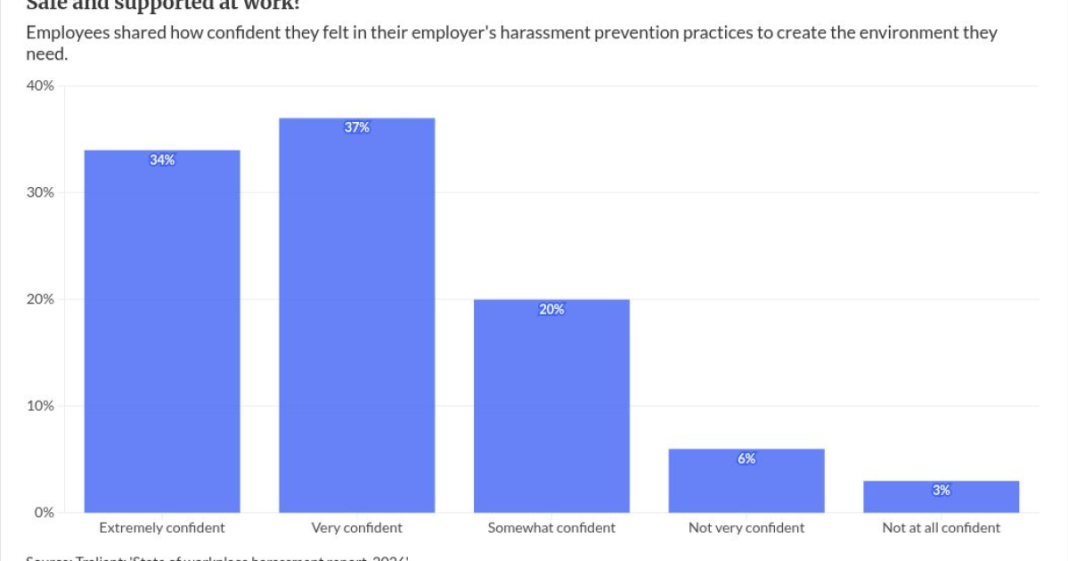
Her experience is not something that happened in a vacuum. In its 2026 State of Workplace Harassment report, workplace compliance services provider Traliant found that 16% of survey respondents reported incidents with clients and other parties. More than one in five (21%) said they were targeted at work, and 71% said their hesitancy to report incidents stemmed from fear of retaliation.
In Stibbs’ case, wanting to build her practice meant that, “I didn’t share it. I handled it myself, but it made me very mindful.”
As with any business that involves direct contact with people, unexpected or cringe-worthy moments naturally arise from time to time. But what happens when those moments cross the line into inappropriate behavior? In this installment of Ask an Advisor, we asked, “What should you do if a client hits on you?”
‘You are the ideal man’
Advisors are “trying to balance client service and personal boundaries,” said Stibbs. “We get into a very personal relationship.” This occasionally means a client could misinterpret typical advisor behavior as an opportunity to flirt.
Kashif Ahmed is the president of Bedford, Massachusetts-based American Private Wealth, with over three decades in the industry and 15 at his firm. During that time, he has seen his fair share of clients, including occasionally flirtatious ones.
“My clients know I am a very committed father and family man,” he said in an email, “so even when they say these things, they know it’s all fun and nothing more than that.”
Even so, he finds himself on the receiving end of compliments that cross the line. “One client stated, ‘You are the ideal man; where were you when I was getting married?'” he said.
Another client declared her love for “everything about you,” he said. After complimenting his look, clothes and cologne, the client insisted, “I am not hitting on you. But I do keep your picture as my phone wallpaper, and if I get hit on, I tell them this is my boyfriend.”
To prepare advisors for moments like this, Stibbs recommends firmwide policies and training that clearly outline what advisors can and should do to get “back into the business part of the conversation,” she said. “As simply as you can, but as clear and courteous as you can, try to redirect and skim over it.”
Policy can protect advisors
Ahmed may have been able to laugh off a client using his photo as her device’s wallpaper, but digital communication with clients presents its own challenges. Because texts, emails and other off-channel interactions often take place outside the four walls of an office, firms should have a clear policy governing how advisors respond in order to protect themselves, their clients and the firm.
When employees at Stibbs’ firm brought her inappropriate client communications and asked how to respond, “I said it’s easy — blame it on me,” she said. “Your employer does not allow you to engage with clients in any way but a professional manner.”
If a client is being inappropriate through off-channel communications, advisors need to set clear boundaries. “I think you have to be more direct,” said Stibbs. “State that it’s a business relationship, that there was no ill intent, and that it’s not the direction you would like to take with that client due to professional boundaries.”
The social gray area
Chase Munoz is an advisor with Olympia, Washington-based Rainier Capital Investment. Much of his practice involves working with women business owners. Although most of his clients are married and don’t typically hit on him, “They try to set me up with their friends,” he said in an email.
Recently, a client offered a double date with a friend who was recently divorced. Munoz faced a dilemma with the ask. “These are some of my favorite clients that I love spending time with,” he said. “So, I agreed.”
Plans progressed and changed, and he ended up on a triple date that included the initial couple, the new divorcée and another couple, one half of which was one of his clients and her current boyfriend.
“I couldn’t get the whole professional aspect of it out of my head,” he said. “If this didn’t go well or if we started a relationship and it ended, what would my clients think of me?”
Giving it daylight
Stibbs said advisors should not feel they have to deal with these situations alone. Bringing uncomfortable interactions to a supervisor’s attention can help establish appropriate next steps and ensure the advisor has support.
In cases where interest is mutual, she said advisors should discuss with firm leaders beforehand. “If you’re super interested, then we could discuss how you pursue that,” she said.
To ensure ethics and policies align, sitting down for a discussion about intention, boundaries and expectations is in order. Relationships go one way or the other, so establish a mutual understanding at the outset of what happens if things don’t work out versus if they do, and let colleagues and employers know as a courtesy.
Regardless of the circumstances, transparency is key. “I want my associates and team to know we have a plan to take care of them,” Stibbs said, “and that the priority would not necessarily be the client relationship and that we would handle it.”