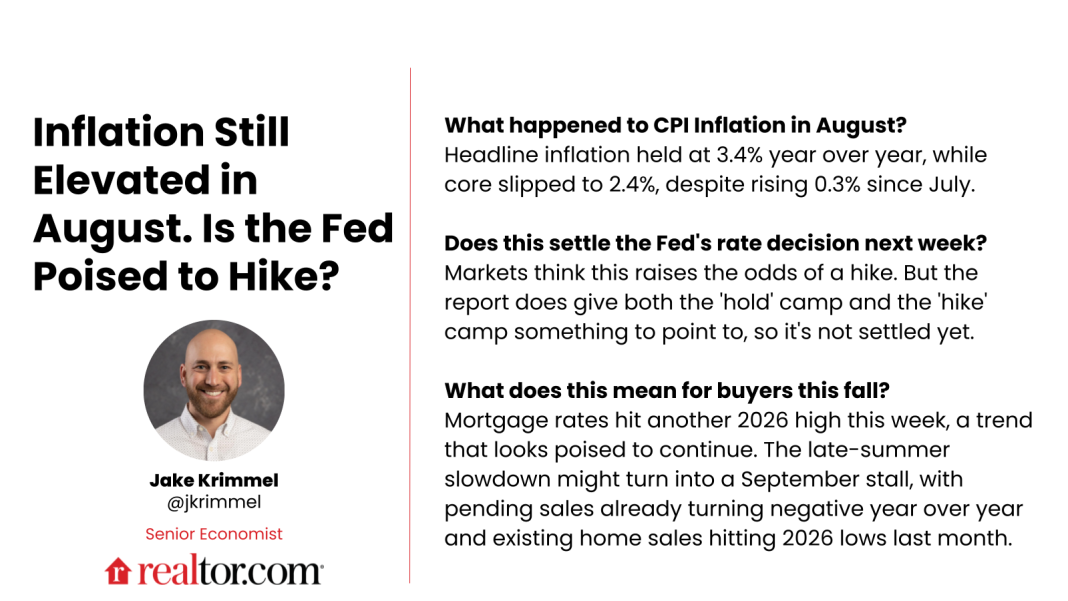

August’s consumer price index landed almost exactly where forecasters expected. Headline inflation held at 3.4% year over year and core cooled to 2.4%, extending a months-long streak of progress. But the report was anything but quiet: the monthly core reading ran hotter than forecast, the CME FedWatch tool crashed from a surge in traffic within minutes of release, and hike odds had jumped to 87% by the time it came back online. Mortgage rates, meanwhile, just hit another 2026 high. Here’s what today’s report means for the Fed, consumers, and the housing market.
August 2026 CPI at a Glance
- Headline CPI: +0.4% MoM Seasonally Adjusted (SA), following July’s +0.1% rise; annual rate held at 3.4%, unchanged from July
- Core CPI (less food & energy): +0.3% MoM (SA) after +0.2% in July; annual rate eased to 2.4%, down from 2.5%, and down from 2.9% as recently as May
- Gasoline: +3.9% MoM (SA), +27.4% YoY, accounting for over a third of the month’s total increase
- Shelter: +0.3% MoM (SA) after +0.1% in July, reaccelerating and driving much of core’s monthly uptick
- Mortgage rates: hit another 2026 high this week at 6.76%
- Market reaction: CME FedWatch odds of a hike stood at 69.4% heading into the release; the site crashed from traffic within minutes, and odds had jumped to 87% by the time it came back online
August CPI: in line on the year, hotter under the hood
Friday’s August Consumer Price Index report came in as expected, with all eyes now shifting to how the Federal Reserve will interpret it. Headline inflation held at 3.4% year over year (+0.4% month over month), while core slipped to 2.4% year over year despite rising 0.3% month on month. Core, which matters more for markets and the Fed, has now been on a clear downward trend since spring, from 2.9% in May to 2.6% in June to 2.5% in July. Even if volatile energy prices don’t matter much for the Fed, they certainly do for consumers, and the one percentage point gap between headline and core will keep weighing on households even if policymakers brush it aside.
The CME FedWatch tool crashed from traffic within minutes of release, which tells you plenty about the perceived importance of a single print.
What it means for the Fed: a Rorschach test with no clear verdict
In theory, since today’s numbers came in almost exactly as expected, we shouldn’t have learned anything new about the Fed’s rate decision. Chairman Warsh and the FOMC are focused squarely on inflation, not labor, and with today’s report as the last inflation read before their September 16 meeting (the Fed’s preferred PCE inflation gauge won’t drop until September 30), the stakes this morning were always going to be high. That came through in real time: the CME FedWatch tool, which had hike odds at 69.4% heading into the report, crashed from traffic within minutes of release, which tells you plenty about the perceived importance of a single print. By the time the site came back online, hike odds had jumped to 87%.
Prediction markets seem rather convinced, but the report may prove a bit of a Rorschach test for the FOMC itself, probably not shifting any priors on the Committee. The Fed’s ‘hold” camp, Governor Chris Waller among them, gets cover from a core rate that’s now cooled to 2.4% year over year, three straight months of improvement. The ‘hike’ camp can feel their position confirmed too, with monthly core up 0.3% and both CPI and PCE stubbornly above target yet again. Warsh himself said at Jackson Hole, “We should not rely on isolated data points. Trends matter most.” And although rate hikes next week still look more likely than not, today’s report won’t settle any debates in the Fed boardroom.
What it means for housing, and homebuyers and sellers
Why CPI matters for households and housing goes beyond the Fed’s reaction function. It’s about headline inflation over core; price levels over annual inflation rates; and 30-year mortgage rates over short-run rates. Right now, regardless of how the Fed parses this potentially pivotal CPI read, all three consumer signals are pointing in the wrong direction: August gas prices are part of why headline inflation remains so high and well above core; elevated prices hurt household savings; and mortgage rates again hit 2026 highs yesterday – a trend that looks poised to continue. For housing, that means the late-summer slowdown might turn into a September stall, with pending sales recently turning negative year over year and existing home sales hitting their annual low in August. Regardless of how today’s CPI report influences next week’s Fed decision, households and the housing market need a path toward lower inflation – for purchasing power, consumer confidence, and lower mortgage rates next year.