
- Key takeaways: While their approaches differ, both Huntington and Goldman Sachs say their overarching goal is boosting small businesses by offering them crucial AI tools.
- Forward look: Huntington is unveiling its 1866 Studio with a relatively modest eight AI agents, but it expects to have more than 60 available within a year, President Brant Standridge said.
Huntington Banchshares aims to galvanize its small-business banking franchise by equipping entrepreneurs with agentic AI tools.
Processing Content
The $288 billion-asset, Columbus, Ohio-based company unveiled its 1866 Studio late last month in partnership with Google. It provides small-business owners with a suite of agents Huntington says can streamline noncore operations, recapturing time that can be spent on fundamentals.
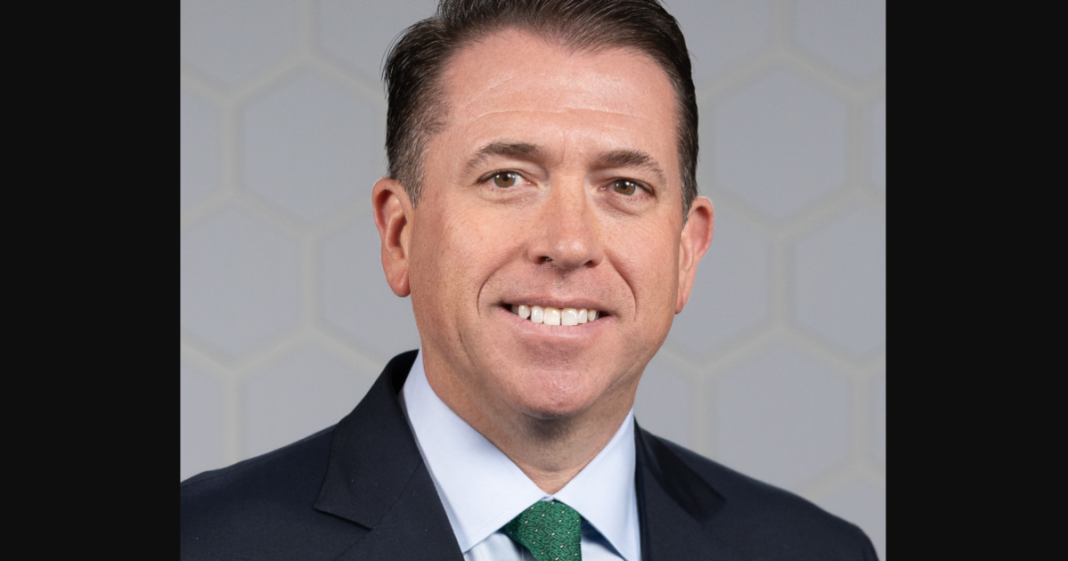
“If you’re part of the studio, you would constantly have access to tools you can use to manage your business from day to day,” Huntington President Brant Standridge told American Banker.
“This really makes agentic AI a product offering,” Standridge added.
Huntington’s move aligns with a broader trend involving lenders and tech companies providing small business operators with access to AI tools. Indeed, the same week Huntington unveiled the 1866 Studio — named in honor of the bank’s founding year — Goldman Sachs launched its Small Business AI Institute, a $500 million effort to deliver AI-focused education and research. It will also support AI-enabled projects that expand small-business access to capital.
Inside the studio
Huntington, one of the nation’s most prolific small- business lenders estimates there are 36 million small businesses operating nationwide with millions of aspiring entrepreneurs hoping to start new ones. Much like Goldman Sachs, it’s interested in giving them a leg up. Huntington also wants to win their business
“I would expect that this would allow us to capture customers, both in our footprint and nationally,” Standridge said of the 1866 Studio.
Huntington is aiming the 1866 Studio at businesses with up to $2 million in revenue. However, Vijay Konduru, executive vice president, AI products and business innovation, said its main targets are owner-operator firms whose leaders handle a wide-range of non-core functions.
“This was a really critical customer need that we saw in the marketplace, all the complexity that small- business owners have to go through,” Konduru said last week in an interview at American Banker’s Small Business Banking conference.
Huntington’s solution combines a number of functions into what it characterizes as a front-to-back small- business operating system. It encompasses financial tasks such as banking and payments, as well as nonfinancial tasks including human resources, marketing and inventory management.
The 1866 Studio also has a module for aspiring entrepreneurs that helps them navigate the steps involved in starting a business, Konduru said.
Standridge likened the 1866 Studio’s design to a phone with apps loaded onto it. The initial launch, scheduled for later this month, will include eight agents “but I can very easily envision 30, 40, 50, 60 agents a year from now,” Standridge said. “We have a release schedule for the next six months that is very intense.”
“Our goal is to have essentially weekly release of agents,” Standridge added.
Read more:
Both Standridge and Konduru said the level of interest in the 1866 Studio has been robust. A successful start would go a long way toward boosting Huntington prospects for 2027, as the company moves beyond integrating the two Texas-based banks it acquired in 2025 and shifts focus to driving organic growth across its expanded footprint.
The market appears to be wide open. A survey Goldman Sachs conducted this spring found that 76% of small- business respondents reported using AI tools, but only a handful, 14%, said they had fully integrated them into their operations.
An education in AI
Goldman Sachs is positioning the Small Business AI Institute, which it developed in partnership with Anthropic, Google, Meta and OpenAI, as an expansion of its 10,000 Small Businesses campaign, which also included an education component and funding for
“Every major technology shift has rewarded the businesses that adapt most quickly,” Goldman Sachs Chairman and CEO David Solomon said in a press release. “This commitment makes sure the entrepreneurs who are creating America’s jobs can lead in the AI economy.”
At an event in New York publicizing the Small Business AI Institute’s Oct. 22 launch, Solomon said Goldman Sach’s goal was to help small businesses gain insights into AI and ways it can strengthen their businesses.
“Our real focus is to think about how do I take this technology and help it make my business more productive, my people more productive and [ensure] my clients and customers receive a better experience, better service,” Solomon said.
As one of the largest investment banks in the country, Goldman Sachs’ operations seldom intersect with small businesses. Its outlook is bigger picture, supporting the massive small-business sector to generate growth that benefits the entire economy, including Goldman and its large-cap clients.
“We forget sometimes how vital and important small businesses are to the lifeblood of this great nation and this economy,” Solomon said at the event. “By number, 99% of the businesses in this country are small businesses, and these small businesses generate over 60% of the new jobs each year, so this is a hugely important ecosystem.”