
One of the most memorable scenes from the 2015 film The Big Short was Christian Bale (playing Michael Burry) blasting Metallica’s Master of Puppets at full volume. But one of the biggest winners from the 2008 global financial crisis is not the only metalhead in the world of finance.
Ask the average trader about heavy metal, and you are probably more likely to get a breakdown of the merits of investing in copper, zinc and lead than an explanation of why bands are fusing traditional heavy metal, hardcore punk and grunge.
However, scratch the surface of an apparently conventional asset manager, and you may well find someone who spends more time thinking about Sleep Token than asset tokens.
‘Metalheads’ in Front of Trading Screens
Take Lourens Reichert, for example. By day, he’s the mild-mannered managing partner for Africa at advisory firm Holborn Assets. But mention Slayer, Lamb of God, Sepultura or Machine Head and he is instantly transported into a world of power chords and blast beats.
Lourens Reichert, Managing Partner for Africa at Holborn Assets
“I came into heavy metal through hip hop in the early to mid-1990s,” he explains. “I was massively into rap and basketball culture (still am), but I always gravitated towards the darker and more aggressive side of it, such as horrorcore, darker production and heavier energy.”
What really pulled Reichert towards metal was the crossover movement that started in the late 1990s, when bands like Cypress Hill experimented with rock and metal elements. He describes the arrival of Limp Bizkit, with their fusion of hip hop rhythm and heavy guitar, as the true gateway to heavier music for him.
Read more: Music and Productivity: How Traders Can Use Music to Enhance Focus
“The first band that genuinely hooked me was Sepultura,” he says. “Their 1996 album Roots absolutely blew my mind. It had groove, rhythm, aggression and atmosphere – it felt primal and completely different from anything else I had heard at the time. From there, I fell headfirst into heavy metal through the whole late-1990s nu metal and groove metal explosion.”
The first proper metal gig he attended was Slayer and Sepultura at the London Astoria, an experience he refers to as absolutely mind-shattering.
“That was the moment I understood that heavy metal isn’t just sonically compelling; it is visually and physically overwhelming in the best possible way,” says Reichert. “The energy, the crowd, the volume, the sheer spectacle of it all. Since then, I have been a regular at metal shows.”
He says his favourite live band of all time is probably Rammstein for their ability to combine music, theatre and spectacle. In terms of post-2000 metal, Lamb of God stand out for their balance of technicality, groove and raw aggression.
“More recently, the band I have really fallen in love with is Orbit Culture from Scandinavia,” he adds. “They feel like a modern evolution of groove metal – incredibly heavy, cinematic and atmospheric, but still with massive hooks.”
Heavy Metal Is Great for Clearing One’s Head of Distractions
He’s not alone. Stefan Nilsson, founder of the Hedge Funds Club, reckons heavy metal is great for clearing one’s head of distractions, blasting away unnecessary thoughts and providing the energy needed to navigate choppy markets.
Stefan Nilsson, Founder of the Hedge Funds Club
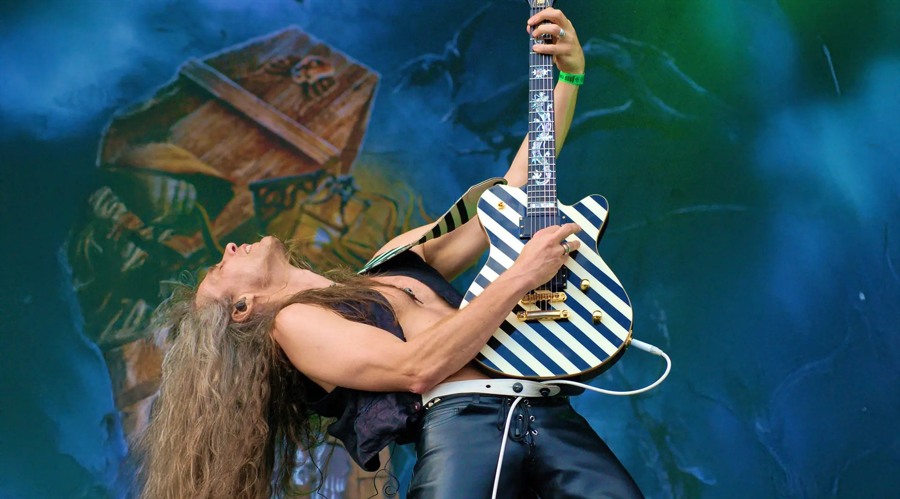
But what about heavy metal artists who have become enthusiastic investors? One man who fits this profile is Axel ‘Ironfinger’ Ritt, who first picked up the guitar at 12 and earned his nickname for using extremely heavy-gauge strings.
After studying music in Dortmund and playing in bands like XRIDE, Zünder, Kingdom and Domain, he became the guitarist of German heavy metal icons Grave Digger in 2009, touring worldwide and achieving international chart success.
You might also like: Inside Prop Trading’s iGaming Psychology Engine
Praised as ‘the fastest fingers in Germany’, Ritt is also a producer, music publisher and owner of Meadow Recording Studios and two production companies, for whom the Covid pandemic provided the motivation to take a closer interest in how his money was managed.
When asked to describe his investment philosophy, Ritt simply points out that you have to invest whether you like it or not, unless you don’t care that inflation is eating away at your savings.
“Since our politicians are either incompetent or corrupt, they opened the floodgates by abolishing the gold standard, allowing the public to be taken for a ride from start to finish,” he says. “In recent years, I have sold all my individual stocks and now only work with ETFs in the fiat market. That way, I at least keep inflation in check, but you can’t make any money out of it.”
Ritt admits that he hasn’t always got it right and that while he has done well from investing in Apple, for example, he was less successful with Arcandor (a German holding company that oversaw a number of companies operating in mail order and internet shopping, department stores and tourism services, and filed for bankruptcy in 2009) and New Jersey-based natural and organic food company Hain Celestial, which was forced to restructure following severe financial challenges, a half-billion-dollar drop in asset values and executive turnover.
He is more optimistic about the future of Bitcoin, describing it as humanity’s greatest invention while dismissing other cryptocurrencies as useless junk.
“For a while, I held out hope that smart contracts would give coins like Ethereum some purpose, but unfortunately, that turned out to be a flop,” says Ritt. “If society holds out long enough and more people engage with Bitcoin, there is a chance for a better world. However, all first-world governments will deploy their entire arsenal to deny citizens the freedom they deserve.”
Not surprisingly, given his forthright views on what works and doesn’t work for him, Ritt won’t be looking for investment advice any time soon.
“I no longer need advice as I made my decisions some time ago,” he concludes. “I’m no longer interested in individual stocks or altcoins; the rest is being managed through dollar-cost averaging.”
One of the most memorable scenes from the 2015 film The Big Short was Christian Bale (playing Michael Burry) blasting Metallica’s Master of Puppets at full volume. But one of the biggest winners from the 2008 global financial crisis is not the only metalhead in the world of finance.
Ask the average trader about heavy metal, and you are probably more likely to get a breakdown of the merits of investing in copper, zinc and lead than an explanation of why bands are fusing traditional heavy metal, hardcore punk and grunge.
However, scratch the surface of an apparently conventional asset manager, and you may well find someone who spends more time thinking about Sleep Token than asset tokens.
‘Metalheads’ in Front of Trading Screens
Take Lourens Reichert, for example. By day, he’s the mild-mannered managing partner for Africa at advisory firm Holborn Assets. But mention Slayer, Lamb of God, Sepultura or Machine Head and he is instantly transported into a world of power chords and blast beats.
Lourens Reichert, Managing Partner for Africa at Holborn Assets
“I came into heavy metal through hip hop in the early to mid-1990s,” he explains. “I was massively into rap and basketball culture (still am), but I always gravitated towards the darker and more aggressive side of it, such as horrorcore, darker production and heavier energy.”
What really pulled Reichert towards metal was the crossover movement that started in the late 1990s, when bands like Cypress Hill experimented with rock and metal elements. He describes the arrival of Limp Bizkit, with their fusion of hip hop rhythm and heavy guitar, as the true gateway to heavier music for him.
Read more: Music and Productivity: How Traders Can Use Music to Enhance Focus
“The first band that genuinely hooked me was Sepultura,” he says. “Their 1996 album Roots absolutely blew my mind. It had groove, rhythm, aggression and atmosphere – it felt primal and completely different from anything else I had heard at the time. From there, I fell headfirst into heavy metal through the whole late-1990s nu metal and groove metal explosion.”
The first proper metal gig he attended was Slayer and Sepultura at the London Astoria, an experience he refers to as absolutely mind-shattering.
“That was the moment I understood that heavy metal isn’t just sonically compelling; it is visually and physically overwhelming in the best possible way,” says Reichert. “The energy, the crowd, the volume, the sheer spectacle of it all. Since then, I have been a regular at metal shows.”
He says his favourite live band of all time is probably Rammstein for their ability to combine music, theatre and spectacle. In terms of post-2000 metal, Lamb of God stand out for their balance of technicality, groove and raw aggression.
“More recently, the band I have really fallen in love with is Orbit Culture from Scandinavia,” he adds. “They feel like a modern evolution of groove metal – incredibly heavy, cinematic and atmospheric, but still with massive hooks.”
Heavy Metal Is Great for Clearing One’s Head of Distractions
He’s not alone. Stefan Nilsson, founder of the Hedge Funds Club, reckons heavy metal is great for clearing one’s head of distractions, blasting away unnecessary thoughts and providing the energy needed to navigate choppy markets.
Stefan Nilsson, Founder of the Hedge Funds Club
But what about heavy metal artists who have become enthusiastic investors? One man who fits this profile is Axel ‘Ironfinger’ Ritt, who first picked up the guitar at 12 and earned his nickname for using extremely heavy-gauge strings.
After studying music in Dortmund and playing in bands like XRIDE, Zünder, Kingdom and Domain, he became the guitarist of German heavy metal icons Grave Digger in 2009, touring worldwide and achieving international chart success.
You might also like: Inside Prop Trading’s iGaming Psychology Engine
Praised as ‘the fastest fingers in Germany’, Ritt is also a producer, music publisher and owner of Meadow Recording Studios and two production companies, for whom the Covid pandemic provided the motivation to take a closer interest in how his money was managed.
When asked to describe his investment philosophy, Ritt simply points out that you have to invest whether you like it or not, unless you don’t care that inflation is eating away at your savings.
“Since our politicians are either incompetent or corrupt, they opened the floodgates by abolishing the gold standard, allowing the public to be taken for a ride from start to finish,” he says. “In recent years, I have sold all my individual stocks and now only work with ETFs in the fiat market. That way, I at least keep inflation in check, but you can’t make any money out of it.”
Ritt admits that he hasn’t always got it right and that while he has done well from investing in Apple, for example, he was less successful with Arcandor (a German holding company that oversaw a number of companies operating in mail order and internet shopping, department stores and tourism services, and filed for bankruptcy in 2009) and New Jersey-based natural and organic food company Hain Celestial, which was forced to restructure following severe financial challenges, a half-billion-dollar drop in asset values and executive turnover.
He is more optimistic about the future of Bitcoin, describing it as humanity’s greatest invention while dismissing other cryptocurrencies as useless junk.
“For a while, I held out hope that smart contracts would give coins like Ethereum some purpose, but unfortunately, that turned out to be a flop,” says Ritt. “If society holds out long enough and more people engage with Bitcoin, there is a chance for a better world. However, all first-world governments will deploy their entire arsenal to deny citizens the freedom they deserve.”
Not surprisingly, given his forthright views on what works and doesn’t work for him, Ritt won’t be looking for investment advice any time soon.
“I no longer need advice as I made my decisions some time ago,” he concludes. “I’m no longer interested in individual stocks or altcoins; the rest is being managed through dollar-cost averaging.”