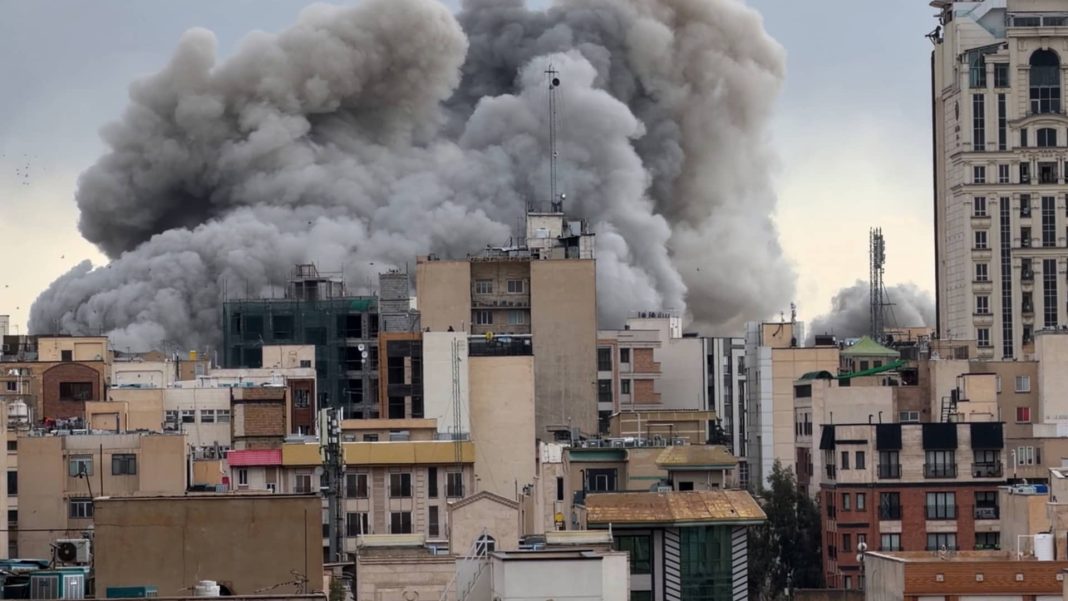

A plume of smoke rises after a strike in Tehran, Iran, Monday, March 2, 2026.
Mohsen Ganji | AP
Concerns about the Iran war and fears of slowing U.S. economic growth have contributed to volatility in financial markets, prompting some investors to worry about how to keep their money safe and where to find stable returns.
“War is always worrisome. People lose their lives. Property is destroyed. Markets are disrupted,” said Blair duQuesnay, a certified financial planner and chartered financial analyst at Ritholtz Wealth Management. Yet, she said she reminds concerned clients that while “wars can last several years, for most people, their [investing] time horizon is decades.”
Diversifying investments with equities, bonds, and cash over the long term is critical, financial advisors say, but it is also important to plan where you will stash cash in the short run.
Timeframe for goals determines your best options
Financial advisors generally recommend keeping six to 12 months’ worth of expenses in an emergency fund, and 2% to 10% of a portfolio in cash, depending on your individual circumstances, life stage, and goals.
“If it’s money you’ll need in the next 30 days, it should be in a checking account; the next six months, a high-yield savings account,” said duQuesnay, who is also a member of the CNBC Financial Advisor Council. If your time frame is six months to two years, consider U.S. Treasury bills or short-term Treasury exchange-traded funds that mature in zero to three months, she said.
Financial advisors typically say money for short-term goals should not be subject to the stock market risk.
“There’s something they want one or two years from now, so they can’t afford the volatility that comes with the market, and money you need one or two years from now should not be invested,” said wealth manager Gloria Garcia Cisneros of LourdMurray in Los Angeles. She is also a CNBC Financial Advisor Council member.
Review your investment portfolio’s equity exposure
“We just don’t know how deep and long this conflict will take. So we’re taking some chips off the table and hunkering down a little,” said Kaleialoha Cadinha-Pua’a, CEO and chief investment officer of Cadinha & Co., based in Honolulu.
Her firm, which is ranked No. 15 on CNBC’s Financial Advisor 100 list for 2025, has recently been “dialing back” equity positions in clients’ portfolios because of “valuations, volatility, and the AI scare,” she said.
For some clients, moving some of their equity investments to Treasuries provides “higher yields and lower taxes” than high-yield savings accounts, she said.

Consider U.S. Treasury bills and ETFs
Cadinha-Pua’a recommends “laddering T-bills” — buying short-term, U.S. Treasuries with staggered maturity dates to help ensure regular cash flow and minimize interest rate risk. T-bills can then be reinvested at higher rates. Short-term U.S. Treasury bills and exchange-traded funds can provide a safe haven for cash and are exempt from state and local taxes, she said.
However, unless you have a large sum to invest and commit to trading, other financial advisors say it may be easier to park short-term funds in a high-yield savings account, which won’t lock up your money for a set term and offers daily access to funds with FDIC insurance protection up to a set limit.
Don’t completely cash out of stocks
“Moving 100% to cash may feel safe, but it introduces interest rate risk, inflation risk, and opportunity cost,” CFP Valerie Rivera, founder of FirstGen Wealth in Chicago, wrote in an email. “There is no risk-free option. Even being too conservative is a risk. You run the risk of outliving your money.”
Consistent saving and investing, regular retirement contributions, and working with professional guidance are smart courses of action, many advisors say.
“Ensure your portfolio is diversified, understand what you own and why, and make sure a portion of your retirement income is guaranteed, so market volatility does not force financial decisions,” TIAA Wealth Management and Advice Solutions CEO David Nason wrote in an email. “The clients that are best positioned to weather this uncertainty are those who planned for it before it happened.”
SIGN UP: Money 101 is an 8-week learning course on financial freedom, delivered weekly to your inbox. Sign up here. It is also available in Spanish.