(Author’s note: I know I just wrote about private credit on Friday, but it’s still on my mind. I promise I’ll write about something else tomorrow. Or, at least, I promise I’ll look for something else to write about tomorrow.)
Processing Content
The lawyers for the bankrupt neobank Aspiration Partners are being sued by some former investors, who claim that the lawyers took an active role in the fraud Aspiration perpetrated, as our Carter Pape reported. It could be an important case, because lawyers don’t often get sued for their clients’ actions. But that isn’t what interests me about the story.
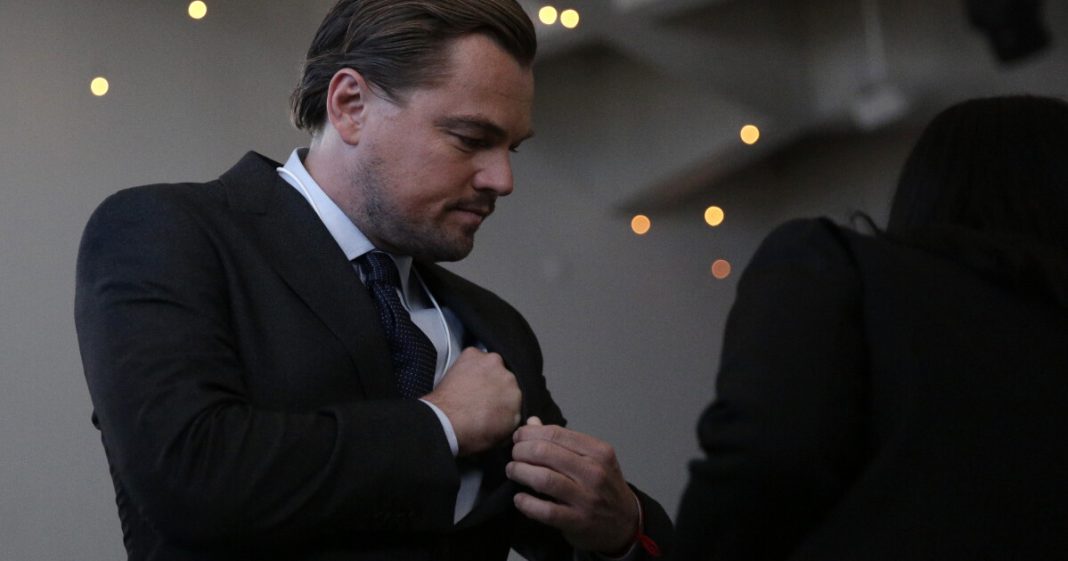
Aspiration is one of those frauds that in retrospect seems obvious. Their claim was they were a neobank that was also in on sustainability and would plant millions of trees to help offset carbon emissions. And had celebrity investors including Leonardo DiCaprio, Robert Downey Jr. and Los Angeles Clippers owner Steve Ballmer. Now, a neobank is a risky but reasonable thing to invest in. A scheme to offset carbon emissions seems riskier. Those two together sound substantially risky. And when you ladle onto that risk boasts that Leo is on board, you really ought to run. Not because Leo is some dummy, I have no idea, but because one of the hallmarks of a fraud is that it tries to entice you, to trigger some degree of anxiety on your part. Bragging about celebrities is definitely a psychological ploy.
“Anyone can get duped by a con man,” First Assistant U.S. Attorney Bill Essayli said after CEO Joseph Sanberg was convicted. Well, yeah, but also, no. What really gets me about this lawyer-lawsuit story is that the plaintiffs are from a former UBS private credit fund. It would be one thing if Aspiration suckered in a bunch of day traders and other rubes. Like Essayli said, anyone can get duped. But a private credit fund? You’d like to think they would be able to sniff out an obvious fraud, or at least a too-risky bet. But they didn’t. In their defense, their whole argument is that the lawyers lied and presented doctored financials. Okay. But, I mean, neobank, planting trees, Leonardo DiCaprio. Do you really need to see the financials on that one?
The reason I bring all this up is because I’m very curious about the standards being applied to investments in the private credit space, and wonder if the Aspiration story is indicative or a one-off. And I worry about that for one very specific reason: the trillions that the AI industry is spending building out its data centers. Morgan Stanley estimates loans will cover $1.5 trillion of that spending over the next few years. What standards are being applied to those loans?
How much revenue do you have to generate to make a trillion-plus in credit produce a satisfactory return? Before you answer that, consider this: Axios reported that an AI consultant told the outlet one of its clients spent $500 million on Claude usage in a single month. How? Recently Anthropic and OpenAI have moved to a token-based billing platform. Before that, they were just billing per user. The client didn’t put any usage limits on its employees because previously there didn’t need to be, and it’s reasonable to assume that power user was spending $500 million before the billing change, too. But the cost didn’t show up because the client was being billed per user and not by usage.
What does all that mean? It means AI companies were essentially subsidizing the costs of their systems for their users. Eating God only knows how much in revenue. The fear now is once companies have to pay by usage and not by user, they will pull back on their usage. How much revenue will the AI companies lose? I’ll tell you how much they can afford to lose: none. Not when you’ve borrowed a trillion-plus to build your data centers. Not when you need to keep spending billions and billions to buy the newest, fastest chips before the other guy does. This is the revenue base that was and is being used to justify the hundreds of billions and trillions worth of loans being extended over the next few years.
If the AI industry really is in a bubble, if it is dangerously overleveraged, this is the kind of thing that can melt it down. And private credit is heavily invested in AI, and banks are increasingly investing in private credit. Those are the connections that have people worried, and the standards being applied to these loans. Private credit appears not to be very good at that. Banks should be better.