
- Key insight: You might think adults who pay for professional financial advice would be less likely to act on AI’s money advice without checking it. According to new research, you’d be wrong.
- Expert quote: “If they can go and ask the chatbot the question, that wall or veil of anxiety may be taken down. Now they’re coming to me armed with more information about that.” — Billy Spencer, director and wealth manager at Boston-based Crestwood Advisors
People who have financial advisors are more likely to be confident and tax-informed, but also more likely to ask AI about money and follow the bots’ outputs without verifying the information.
Processing Content
The finding that professionally advised U.S. adults are the “
The much smaller share of investors who had an advisor, compared with the share of adults who had not received professional advice and were either “not confident about their household finances” heading into 2027 or “did not know the tax impact of their largest recent financial decision,” pointed to the value of working with a financial advisor. But the conclusion that those clients were much more likely than non-advised adults to consult AI and act on its answers without checking another source flew in the face of “conventional wisdom,” Evergreen’s report said.
A growing type of conversation with clients
To be sure, the results of a single study may not jibe with everyone’s experiences or the reality of how current or prospective wealth management clients use AI. However, the Evergreen study does signal that advisors and the industry at large should now expect customers to search for financial information from large language models like ChatGPT and Claude. Some advisors are embracing that shift, even as they warn that LLMs’ financial outputs demand careful scrutiny.
The risk that “someone might ask the wrong question, and they’re going to get a really good-sounding answer that is completely wrong” explains why clients should check AI responses with advisors like Billy Spencer, a director and wealth manager with Boston-based Crestwood Advisors, who can bring their professional judgment and “apply the math to their specific situations,” he said.
Nevertheless, in a time of reliance on digital tools and increasing AI adoption, clients’ LLM queries could lead to deeper conversations with advisors, driven by previously unasked financial questions. Spencer said more clients these days are saying they asked ChatGPT about a financial topic. “The reason I like it is because a well-informed client is a good client,” he said.
Evergreen’s paradoxical conclusion about clients’ AI usage doesn’t make total sense to Melissa Bouchillon, managing partner with Savannah, Georgia-based Sound View Wealth Advisors. But she said it’s “important for advisors to recognize” that customers are talking with bots that may not provide reliable information. That means that advisors could help clients avoid possible pitfalls by asking more open-ended questions and educating them about the privacy and cybersecurity concerns of supplying the bots with their personal data. Bouchillon has had “more and more client meetings” in which customers present AI-suggested strategies or actions, she noted.
“‘It seems like I have underperformed in this or that,’ or whatever it is. In actuality it’s wrong,” Bouchillon said. “I look at it as, it’s interesting. It’s not always correct, and so advisors have to be aware of this and ready.”
Results live on, even if the company that released the report is shuttering
In an illustration of the complexities at the intersection of AI and wealth, the company that conducted the study is shutting down. Evergreen.ai fielded its survey through a SurveyMonkey Audience sample in August and unveiled the findings last month. The app had opened with a beta-testing period in September. Financial technology entrepreneur and author Bill Harris, the former CEO of Personal Capital, Intuit TurboTax and PayPal, launched AI-powered registered investment advisory firm Evergreen Wealth Advisors in 2023.
“The beta test of Evergreen.ai will no longer be available as of November 11, 2026, and all user information will be deleted at that time,” representatives for the firm said in a statement. “Clients of Evergreen Wealth will be transferred to other advisors or custodians by the end of the year.”
Regardless, the company’s demise came after it polled 1,981 U.S. adults between 25 and 75 years old who are the sole or shared financial decisionmakers in their households, without identifying any sponsoring party for the questionnaire. The group had an oversampling of higher-income people with more than $100,000 in investable assets.
Among other findings, the survey showed:
- Advisors get results. At least 60% of the respondents did not work with a financial advisor at the time. Those without one were more than three times as likely (38% to 12%) to say they didn’t know the tax impact of their largest recent financial decision; almost four times as likely (23% to 6%) to say that they didn’t understand the tax implications of the equity stakes they had in the company that employed them; and nearly three times as likely (32% to 11%) to say that they were not confident about their household’s finances as they approached the end of the year.
- People ask AI about money. Nearly half of the group, 48%, reported asking an AI tool a question about their finances, with 78% of those participants saying that they acted on the answers. And 29% followed AI’s instructions without checking the answer through another source.
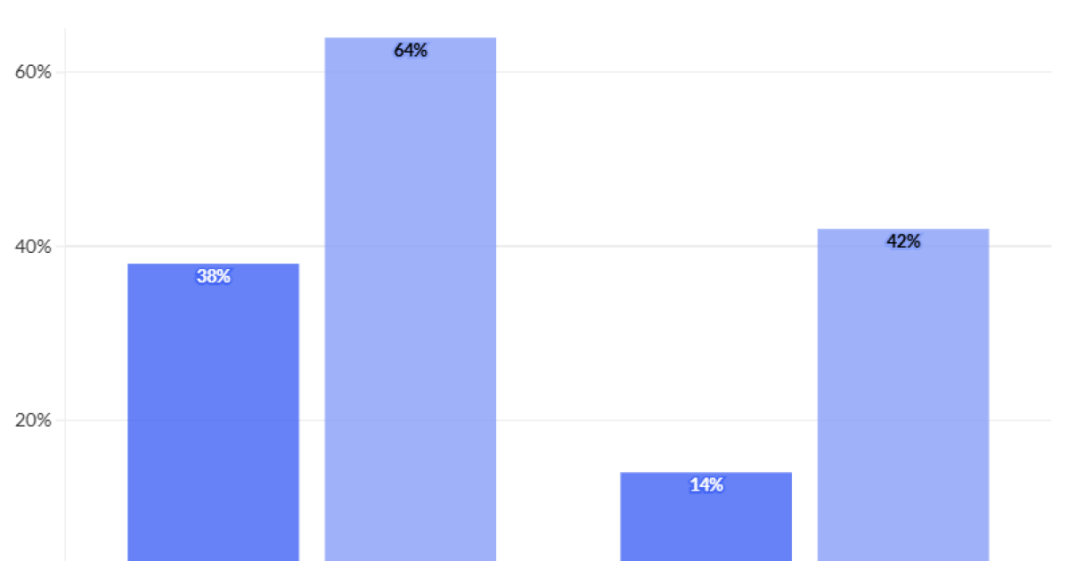
- Advisors’ clients are asking AI about money, too. An even larger portion of those working with an advisor (64%) asked an AI tool about their money and acted on the bots’ responses without checking it elsewhere (42%). Those figures came in, respectively, 26 and 28 percentage points higher than among adults who didn’t have an advisor.
“One plausible reading is comfort: People accustomed to seeking advice seek it everywhere,
and treat AI as one more voice at the table,” the report said. “Whatever the mechanism, the group most exposed to unverified AI guidance is not the one conventional wisdom expects.”
Advising in the AI age
The mixed conclusions reminded Spencer of how AI can be like a sharp knife — very useful to skilled people and dangerous to others. From a psychological and behavioral perspective, though, AI tools may lead to valuable conversations around topics that clients may otherwise not bring up with advisors.
“If they can go and ask the chatbot the question, that wall or veil of anxiety may be taken down,” Spencer said. “Now they’re coming to me armed with more information about that.”
And the wide adoption of AI tools as a sounding board for financial questions reflects how many different areas advisors can cover with clients go beyond investment management, according to Bouchillon. So it’s no wonder that other studies have suggested that behavioral coaching, like a nudge to implement a plan, represents one of the most valuable services advisors provide clients.
“The easy part of what I do is manage somebody’s portfolio,” Bouchillon said. “I think that there needs to be that human interaction. I don’t see us getting replaced.”