
- Key insight: The coming mixed-martial-arts fight on the White House lawn is bound to get a lot of attention, but a far more consequential heavyweight fight between President Trump and former Fed Chair Jerome Powell has already been decided.
- Supporting data: When inflation reached a
40-year high in March 2022, Powell finally raised rates resulting in his failed “too little too late”transitory legacy. -
Forward look: Having lost the Fed chair and failing to restore his standing, Powell exits the ring diminished in both power and legacy. Only time will tell if Warsh does better on Washington’s profit-and-loss measuring tape.
Processing Content
Forget the hyped-up “
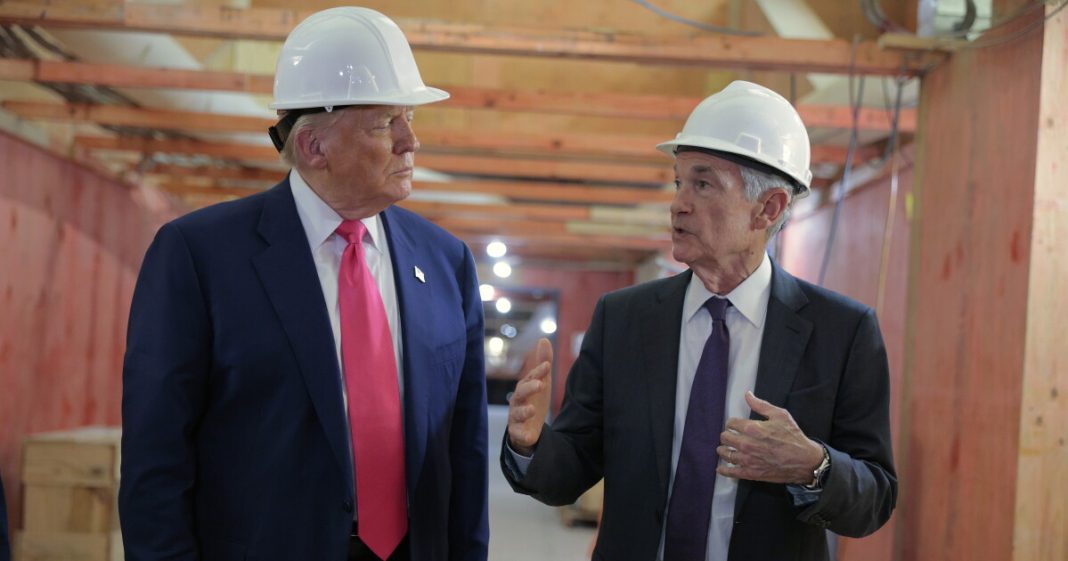
The real “Royal Rumble” was the unprecedented main event between the nation’s two most powerful leaders: President Trump in one corner and
The official scorecard was based on Washington, D.C.’s unique P&L measure: Not profit and loss but power and legacy, the only two currencies that consistently count in the Beltway.
After decades working with government officials and testifying before Congress, I’ve concluded that the power/legacy dynamic exists throughout all halls of government, but especially at the White House and the Fed.
The first step is getting and maintaining power, and the second is building a legacy for when you’re gone.
Power enables action now, and legacy ensures that action matters after the power is gone.
The electorate gives power to the president who, in turn, bestows power on an appointed and Senate-confirmed Fed chair.
The primary goal of every president is reelection, which happens about
Reelection not only keeps them in the world’s most powerful position but helps protect their legacy. Presidents who fail to get reelected are usually associated with a
President Trump’s power goal was achieved by winning a second term, allowing him to continue his goal of a lasting MAGA legacy. History will judge if that second goal is met.
With Powell’s highly ambitious
Powell won that power battle but lost the legacy one, because he ignored repeated staff warnings in
Presidents always favor lower rates to bolster growth and legacy. Inflationary consequences are the next president’s problem.
Low rates get Fed chairs reappointed but at a lasting legacy cost.
The best, actually worst, example is former Fed Chair Arthur Burns who
Nixon kept his power, at least until his 1974 resignation. Burns was reappointed but torched his
Powell knew that story but shockingly repeated it, unfortunately cementing his place as the
The tale of the tape in the Trump/Powell main event was loaded with irony. Trump, who originally appointed fellow Republican Powell, later did everything within his power (and attempted some things outside of it) to push Powell out of office for not aggressively cutting rates to his
With Trump on the verge of securing his power and legacy victory, Powell lost both. Trump stripped Powell’s power by appointing a nearly 20-year younger
Having failed to bring inflation down to his 2% target, Powell made a last-ditch effort to preserve some positive legacy.
After quietly taking Trump’s best shots for over a year, Powell finally went on the offensive this year, apparently hoping to mimic Muhammad Ali’s famous “
Powell finally came out of his corner swinging on Jan. 11, 2026, with his “
That unusual weekend Fed announcement invites comparisons to former Fed Chair Paul Volcker’s “
Powell added a few more counterpunches with his surprising
Powell’s biggest jab was his March and April announcements that he would
Powell will never be in the same P&L league as Volcker, despite ironically receiving the “
Just as Powell is no Volcker, he is no Ali, because he never hit Trump where it truly hurts: by hawkishly suggesting holding and even increasing rates, a move supported by actual and expected inflation data.
That is the punch Powell never threw.
Lisa Cook, who has beaten back Trump’s removal attempts in court, loudly and proudly proclaimed she is “
We now have two Trump-targeted Fed governors with opposite outcomes: one fights and the other, a dethroned Fed chair, retreated and sits quietly in the corner.
Powell chose the institutional Fed independence rope-a-dope but never threw the substantive rate knockout punch.
Having lost the Fed chair and failing to restore his standing, Powell exits the ring diminished in both power and legacy.
Only time will tell if Warsh does better on Washington’s P&L measuring tape.